
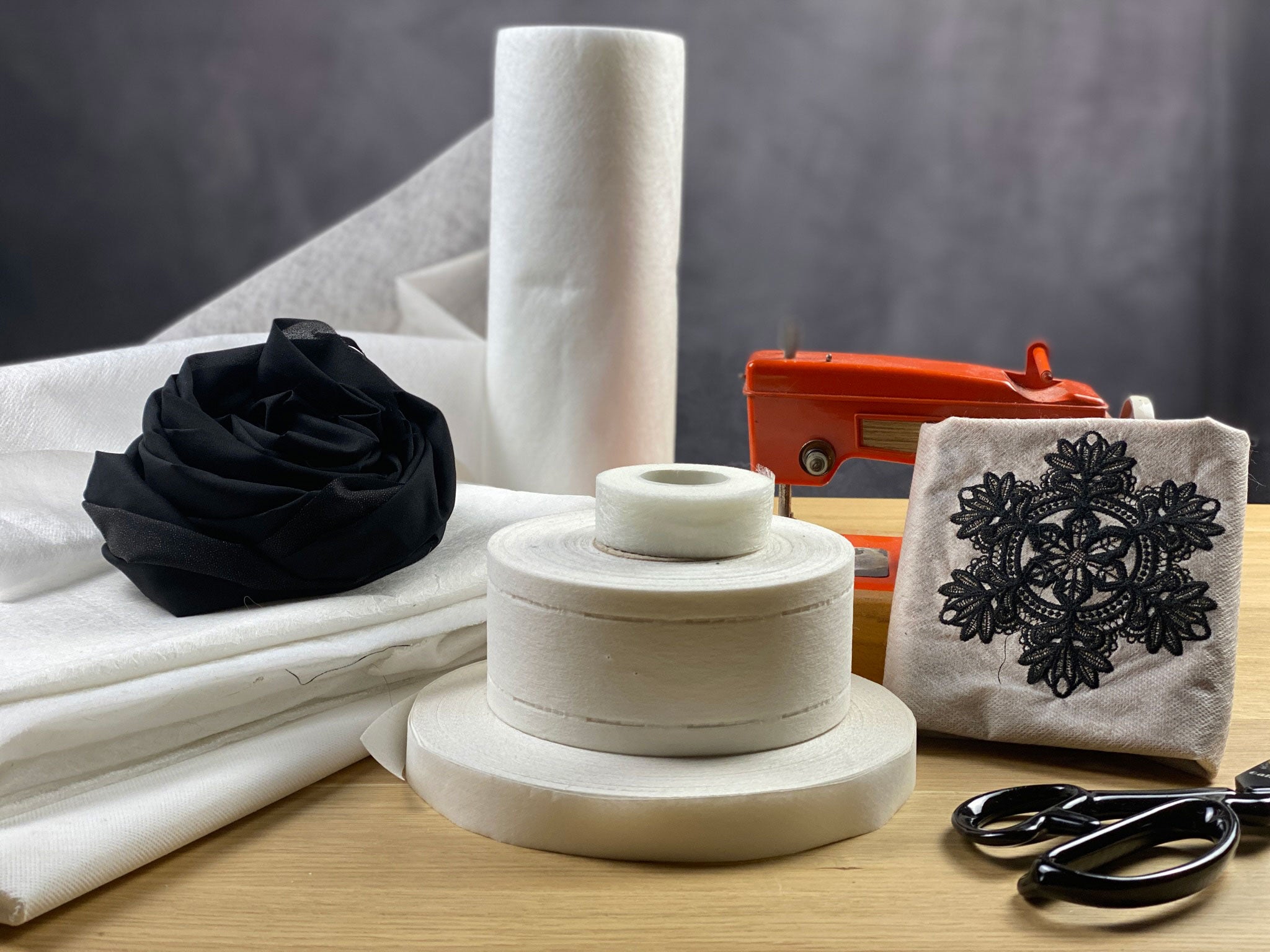
Interfacing is an essential component of many sewing projects. It gives garments stability and shape, ensures neat workmanship, and can even contribute to increased comfort. In this blog post, we'll explore the different types of interfacing, especially fusible interfacings, highlighting their differences and explaining how to best use them. We'll also address potential errors during processing and provide helpful tips for improved handling.
Insoles can be used in various ways to achieve different results.
APPLICATION & PURPOSE OF A PAD
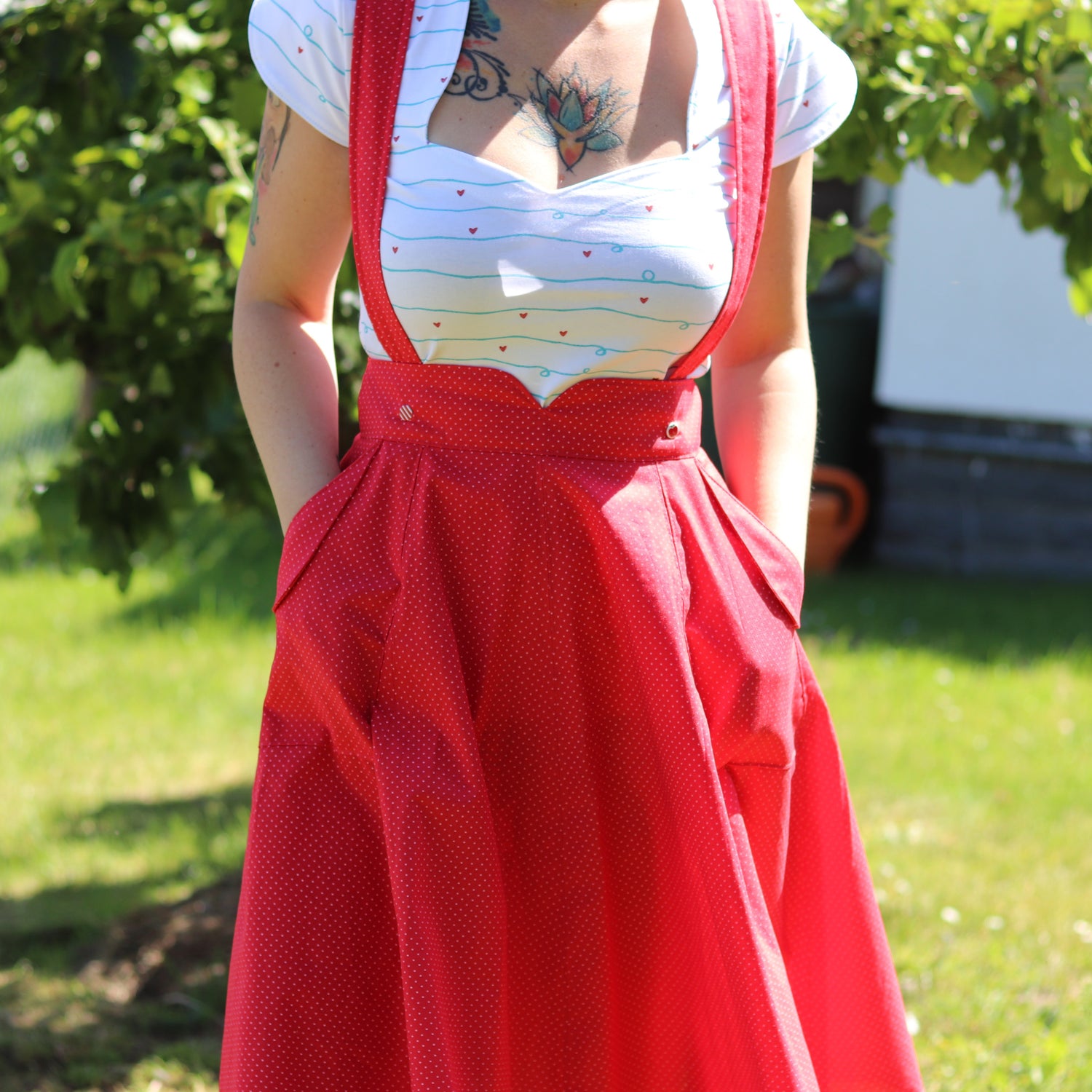
The invisible force behind perfect textile projects
Even in smaller projects, such as reinforcing a skirt waistband, an interlining can significantly improve the final result. It's always a good choice when meticulous workmanship is required, and here we've listed the four most important reasons for using one.
Stabilization | We need 'standing'
Interfacings give garments stability and prevent them from distorting. For example, using Vlieseline G700 in the collar and cuffs of a blouse can support its shape and ensure a neat appearance.
Design | Form Follows Function
Interlinings support the shape, for example in the shoulder area or facings. A good example is the use of horsehair interlining in a blazer to give it a refined texture. This ensures a professional look and a comfortable feel.
Reinforcement | In Strong Arms We Trust
Interfacing reinforces stressed areas such as buttonholes or pocket openings. For example, using Vlieseline H250 to reinforce buttonholes in a coat can make them last longer and increase the garment's durability.
Thermal insulation | Nice to have
When used in winter clothing, interfacings can provide additional thermal insulation. For example, using Vlieseline H640 in a quilt or patchwork jacket can make the garment warmer and cozier.
Here you will find a small selection of different insoles and their areas of application.
COMMON INSOLES | IN BRIEF

Vlieseline G785 | For elastic fabrics
The Vlieseline G 785 interfacing is our unqualified recommendation for a wide range of projects. It's an all-rounder for elastic fabrics and, based on experience, also suitable for smaller projects with woven fabrics. This interfacing deserves not just a heart, but a big thank you for so many successful projects.
Vlieseline G785 is a lightweight, bi-elastic interfacing characterized by its high flexibility and adaptability. It is particularly suitable for stretchy fabrics such as jersey, knits, or elastic woven fabrics. G785 is available in various colors, allowing it to be easily matched to the respective fabric.
Advantages of Vlieseline G785:
- The bi-elastic property of the G785 allows for excellent adaptability to stretchable fabrics and ensures that the shape of the garment is retained without affecting the elasticity of the fabric.
- Due to its lightweight construction, the G785 does not add unnecessary bulk and is therefore perfectly suited for thin, stretchy fabrics.
- The G785 is easy to iron on and work with, so even beginners can use it without any problems.
Processing of Vlieseline G785:
- Cut the interfacing along the grain of the fabric, making sure it is slightly smaller than the fabric to ensure a clean finish.
- Iron the G785 onto the fabric at a medium temperature (approx. 2 dots) using a damp cloth. Be careful not to press the iron too hard and to dampen the cloth frequently to ensure the interfacing is ironed on evenly.
- For best results, allow the ironed-on interfacing to cool completely before sewing.
Application areas of Vlieseline G785:
- The G785 is ideally suited for processing stretch fabrics in clothing, such as T-shirts, leggings, or dresses. It gives the garment stability and shape without affecting the fabric's elasticity.
- The G785 can also be used for accessories made from stretchable materials, such as hats, scarves or headbands, to achieve better shaping and durability.
Vlieseline H180 | For delicate fabrics
This interfacing consists of a thin polyester fleece that provides gentle and flexible reinforcement without weighing down the fabric or restricting its natural movement. Vlieseline H180 is ideal for reinforcing and stabilizing fine and delicate fabrics in various textile and apparel projects.
The Vlieseline H180 is ideally suited for:
- Reinforcement of collars, cuffs and button plackets: The H180 insert gives these areas subtle stability and supports clean and precise workmanship.
- Stabilizing delicate fabrics: The H180 interfacing is ideal for reinforcing fine and delicate fabrics such as silk, chiffon, voile or thin cotton fabrics and helps to achieve a professional finish in your projects.
- Applications and embellishments: The H180 interfacing is perfect for stabilizing fabrics when creating appliqués, embroideries or other embellishments to ensure a clean finish and even seam lines.
- Home textiles: The H180 interlining can also be used in the manufacture of home textiles such as curtains, cushion covers or tablecloths to provide additional support and shape without weighing down the fabric.
Vlieseline 200 | For light to medium-weight fabrics
Vlieseline H200 is a thin, fusible interfacing, similar to H180, specifically designed for light to medium-weight fabrics. It consists of a fine polyester fleece that provides soft and flexible reinforcement without adding unnecessary weight to the fabric. Vlieseline H200 is ideal for a wide range of applications in apparel and textile manufacturing.
The Vlieseline H200 is ideally suited for:
- The H200 interlining gives thin and lightweight fabrics such as silk, chiffon, batiste and voile extra stability without affecting their natural movement and drape.
- Here it offers gentle reinforcement that helps to achieve clean and precise edges in these areas.
- The interfacing is ideal for stabilizing fabrics when creating appliqués, embroideries or other decorations to ensure a clean finish and even seam lines.
- The H200 interfacing can also be used in quilting and patchwork projects to stabilize layers of fabric and facilitate even, precise sewing.
Vlieseline H250 | For medium-weight fabrics
Vlieseline H250 is a medium-weight, fusible interfacing ideal for reinforcing and stabilizing medium-weight fabrics in various textile and apparel projects. This interfacing consists of a dense polyester fleece that provides reliable and firm reinforcement while maintaining the fabric's flexibility and movement.
The Vlieseline H250 is ideally suited for:
- The H250 insert provides additional stability to these areas and supports clean and precise processing.
- H250 is ideal for reinforcing medium-weight fabrics such as cotton, linen or blends and helps to achieve a professional finish in your projects.
- The insert is ideal for reinforcing bags, wallets and other accessories to give them a solid structure and durability.
- Additionally, it can also be used in the manufacture of home textiles such as curtains, pillowcases or tablecloths to provide extra support and shape.
Vlieseline H640 | For Patchwork & Co.
Vlieseline H640 is also a voluminous, fusible interfacing. It's ideal for projects requiring soft padding and added comfort. This interfacing consists of a thick polyester fleece that provides warmth and volume without adding unnecessary weight to the fabric.
The Vlieseline H640 is ideally suited for:
- The H640 insert is ideal for the manufacture of padded jackets, coats and vests to provide extra warmth and comfort.
- The interfacing is ideal for quilting projects where soft padding and volume are desired, such as bedspreads, comforters and wall hangings.
- It can also be used to upholster cushions, seat cushions and other home textiles to provide extra comfort and an attractive appearance.
- It is ideal for reinforcing bags, backpacks and other accessories to give them a padded structure and durability.
Vlieseline G700 | For heavy fabrics
Vlieseline H700 is a heavyweight, fusible interfacing for projects requiring strong stability and durability. This interfacing consists of a firm polyester fleece that provides reliable and solid reinforcement without making the fabric too stiff.
The Vlieseline H700 is ideally suited for:
- The H700 insert is ideal for stabilizing heavy and thick fabrics such as jeans, canvas, wool fabrics and other durable materials.
- It is ideally suited for reinforcing collars, cuffs, button plackets and welt pockets in durable garments to ensure a clean and precise finish.
- This insert is probably the best-known product besides Decovil for reinforcing bags, luggage and other accessories, giving them a solid structure and durability.
- Home textiles: The H700 insert can also be used in the manufacture of home textiles such as curtains, upholstered furniture or tablecloths to provide additional support and shape.
Decovil | For bag lovers
Decovil interfacing is a high-quality interfacing produced for demanding textile and apparel projects that require enhanced dimensional stability and a professional appearance. Decovil consists of a durable polyester and viscose blend that provides firm yet flexible reinforcement to keep the fabric in shape without restricting its freedom of movement.
The Decovil insert is ideally suited for:
- Decovil is ideal for reinforcing handbags, wallets, backpacks and other accessories to give them a solid structure and appealing look.
- It can be used in the manufacture of home textiles such as lampshades, wall hangings or placemats to provide additional support and shape.
- Reinforcement of collars, cuffs and button plackets: Decovil is ideal for reinforcing these areas in garments and ensures a clean and precise finish.
- The insert is perfect for artistic textile projects where increased dimensional stability and durability are required, such as in hat making, jewelry making or sewing 3D objects.
Horsehair inlay | Craftsmanship & Tradition
Horsehair interlining is a high-quality, traditional material that has been used for centuries in the production of premium clothing and bespoke garments. This interlining consists of a blend of horsehair and other natural fibers such as wool or cotton, offering excellent shape retention, breathability, and durability.
The horsehair insert is ideally suited for:
- Interlining is the preferred choice of many tailors and designers for the production of bespoke suits, blazers and jackets, as it offers a first-class structure and a luxurious feel.
- The use of horsehair lining in formal and high-quality garments such as evening dresses, tuxedo jackets or coats gives them an impressive shape and elegance.
- Horsehair interlining is perfect for reinforcing these areas in garments to ensure clean, precise workmanship and a lasting shape.
Working with horsehair interlining requires skill and experience, as it is usually cut and sewn into the garment by hand. The interlining's natural fibers allow for excellent adaptation to the body's shape while offering superior durability and longevity.
QUICK & DIRTY | APPLYING THE LINER
With just a few simple steps, an insert can be neatly applied, making the sewing project significantly more professional.
Collapsible content
Cutting the insert
- Choose the right interfacing for your project. Consider the weight and properties of the fabric, as well as the desired stability.
- Place the pattern piece or fabric piece onto the interfacing with the rough side (coated with adhesive) facing up. Ensure that the fiber directions of the fabric and interfacing match.
- Cut the interfacing along the outline of the pattern piece or fabric. For delicate fabrics or if a seam allowance is desired, cut the interfacing slightly smaller.
apply to the fabric
- Place the fabric piece with the left (non-visible) side facing up on an ironing board or other suitable surface.
- Position the cut-to-size insert with the rough side (adhesive) facing down on the fabric, so that it lies exactly on the fabric piece.
Iron-on interfacing
- Set your iron to the recommended temperature for the specific interfacing. If you are unsure, start with a lower temperature and increase it gradually if necessary. Information on the required temperature can be found on the manufacturer's website or in the product description.
- Place a thin, damp cloth or special ironing paper between the interfacing and the iron to protect the fabric and interfacing from direct heat and adhesive transfer.
Alternatively, architect's paper and baking paper also work. - Press the iron firmly onto the interfacing and hold it in place for a few seconds (usually 5-7 seconds) before slowly moving it across the entire surface. Ensure even pressure and sufficient heat penetration into the interfacing, and do not slide the iron. For best results, repeatedly overlap the iron and press down, rather than simply ironing.
- After ironing, check that the interfacing is firmly bonded to the fabric. If not, repeat the process with slightly more heat and pressure.
Allow the filling to cool.
- Allow the ironed-on interfacing to cool completely before processing the fabric further. Cooling ensures that the adhesive fully cures and the interfacing remains permanently bonded to the fabric.
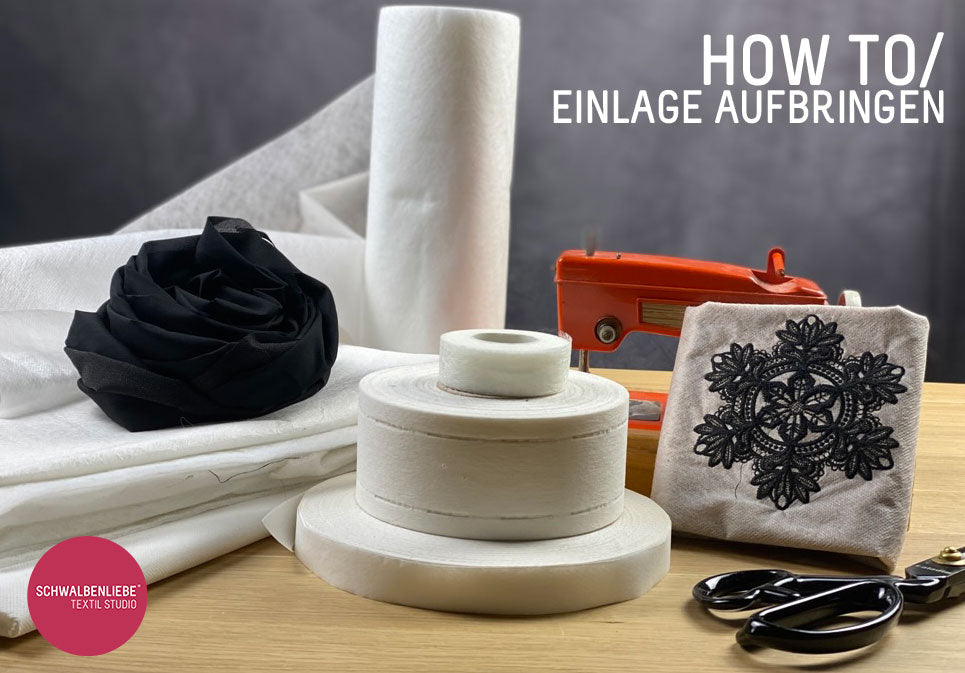
Sources of error in the processing of insoles and tips for better handling
NICE TO KNOW | AVOID SOURCES OF ERRORS
The choice of insert adapted to your project
Make sure the interfacing you choose is suitable for the fabric and the desired result. For example, don't use heavy fusible interfacing on lightweight fabrics, as this can weigh the fabric down and distort it. Many instructions and patterns include a recommendation for the project, and if no information is provided, you can simply refer to our knowledge here for guidance and advice on choosing the right interfacing.
The right cut
You can also influence the sewing process and avoid mistakes during cutting by ensuring clean and accurate cuts right from the start. Always cut the interfacing along the grain to prevent the fabric from distorting. Make sure the interfacing is cut slightly smaller than the fabric for a neat appearance. As a guide, you can cut the interfacing without seam allowance.
On first-name terms with the iron
When ironing on interfacing, be sure to set the correct temperature and duration for the specific Vlieseline product. Too much heat or ironing for too long can cause the interfacing to shrink or damage the fabric. Also, apply gentle pressure with the iron, avoiding over-ironing the fabric or interfacing. The interfacing adheres best with a consistent temperature, duration, and pressure, preventing it from shifting. In our workflow, 5-7 seconds of pressure has proven effective.
Coordinated equipment & clean sewing setup
When sewing with interfacing, use a suitable needle and stitch length to ensure a neat appearance and good adhesion of the interfacing to the fabric. Make sure the seam allowance of the interfacing is not too tight when sewing, as this can lead to an unsightly appearance.
Why cut the insert smaller?
The interfacing is cut smaller to keep the seam allowance clear. This has several advantages when working with the fabric:
- Machine protection: Since the adhesive on the insert can clog the machine needle, leaving out the seam allowance protects the sewing machine.
- Reduced seam thickness: By not extending the interfacing to the seam allowance, the seam becomes less thick, resulting in a cleaner and more even finish.
- Improved workability: Without the additional layer of interfacing in the seam allowance, the fabric is easier to iron, fold and process.
- Flexibility: Because the seam allowance remains more flexible without interfacing, it is easier to make adjustments to the seam if necessary.
- In some sewing processes, however, interfacing in the seam allowance area is useful. This is the case when it 'coats' the fabric, preventing fraying and ensuring it remains stable during processing.
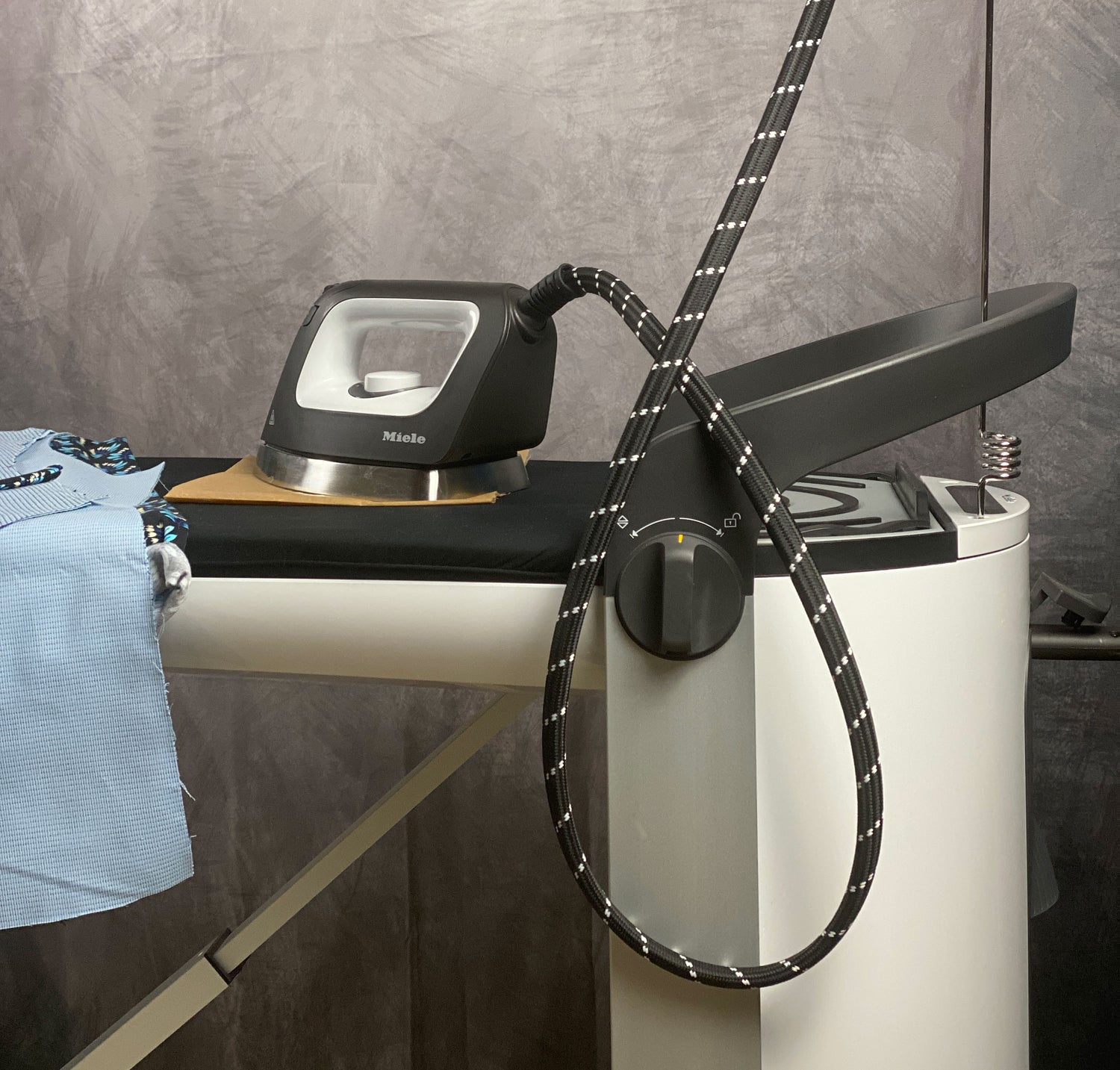
COLD | AIR IRONING
Using an ironing station with a suction function can significantly improve the process of ironing on interfacings, such as fusible interfacing. These special ironing stations are equipped with an integrated suction function that not only helps to fix the interfacing evenly to the fabric, but also improves airflow and cooling after ironing.
If a large VEIT system doesn't fit in the sewing room, then the products from Laurastar and Miele are very good options, and with the Fashionmaster from Miele , which we also use, there is an enormous improvement in the finishing of sewing projects.
It is a reliable, very low-maintenance device that allows stepless height adjustment and is positioned in the professional sector.
Hint. The device can of course also iron all shirts and is indispensable in our studio.
THE IRONING STATION IN BRIEF
Your sewing project is securely placed and fixed in place.
The suction function of the ironing station ensures that the interfacing lies firmly on the fabric during ironing, guaranteeing even pressure and better adhesion of the interfacing to the fabric, resulting in a clean finish and a more professional appearance.
Cooled in the airflow
After ironing on the interfacing, it is important that it cools down completely before sewing begins. The steam function of the ironing station allows for improved airflow and faster cooling, resulting in more efficient processing.
At the same time, the suction function prevents the insert from slipping during the ironing process and cooling.
Avoiding shrinkage
Rapid cooling prevents the insert from shrinking due to prolonged heat, which can lead to distortion of the fabric or an unsightly appearance.
Are there any alternatives to the monster?
Absolutely! Firstly, purchasing an ironing station involves considerable expense and requires sufficient space. Secondly, it's not essential for every Schwalbe to have one. The decision depends primarily on individual circumstances, such as available space, preferred materials, and the overall practicality of the investment.
A practical alternative to a steam ironing station with a suction function for home use is a steam iron combined with an ironing board that allows good steam to pass through. The iron should have a certain weight to exert consistent pressure on the fabric being ironed. This is important for achieving optimal results in smoothing out creases and wrinkles, thus ensuring a well-groomed appearance for the garments.
A fine investment has been made with the Swiss company LauraStar, which has been manufacturing and specializing in irons and stations since 1980 (best year, yeah!).
A LauraStart ironing station with sufficient pressure and good steam permeability – and stylish to boot. The investment is around €300, which is definitely an expense.
A slightly cheaper, but still very good option is a steam ironing station from Tefal . It costs around €150 less and can be stored easily.
And for under €100 you can get a top-notch station from the company Polti , which is also in the professional sector and produces good products.
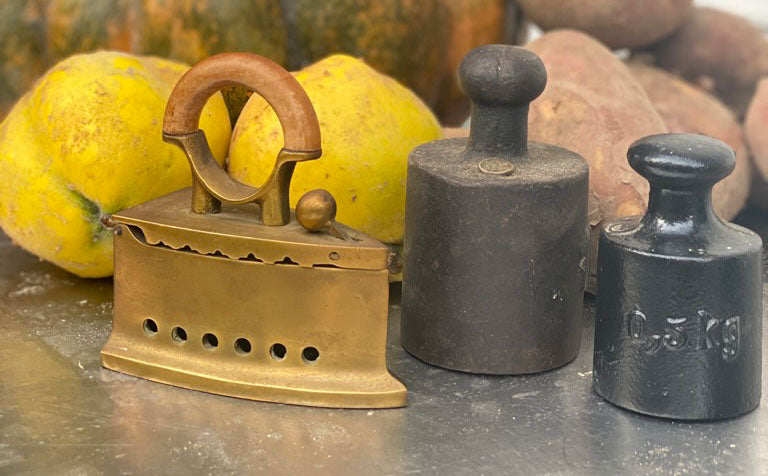
Finally, we want to emphasize: It doesn't have to be a new iron. Old irons that still heat evenly and feel good in your hand are worth their weight in gold, and the steam function can easily be simulated with a damp cloth. Sustainability is key, and some parts of a sewing project can only be reached with these wonderful old pointed irons. So, if you happen to own an old, working iron – simply keep it and enjoy this treasure.
Note: Older irons may not offer as many convenient settings, but due to their non-standardized manufacturing, they are usually considerably hotter than newer irons. With a bit of practice and a little common sense, however, these very hot irons can actually be used to iron clothes more cleanly. Twenty years ago, there weren't as many DIN standards, so many irons have a much higher wattage than they do today.
It always pays to put love and passion into sewing.
-
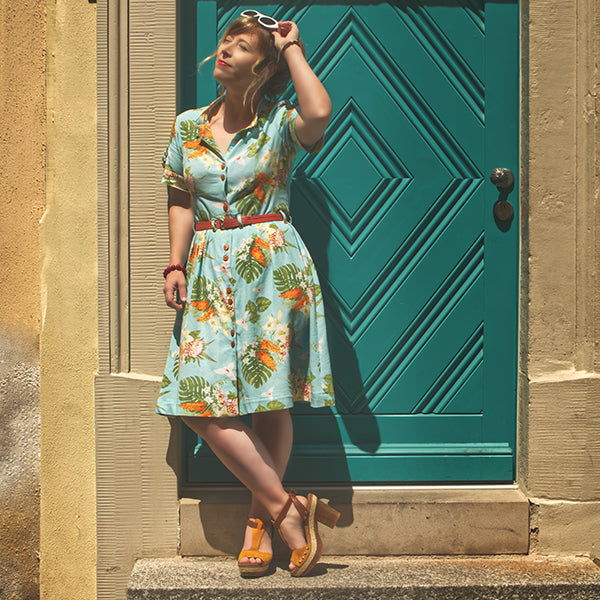
NEMA | 40s DRESS
FOR DRESS & COLLAR -
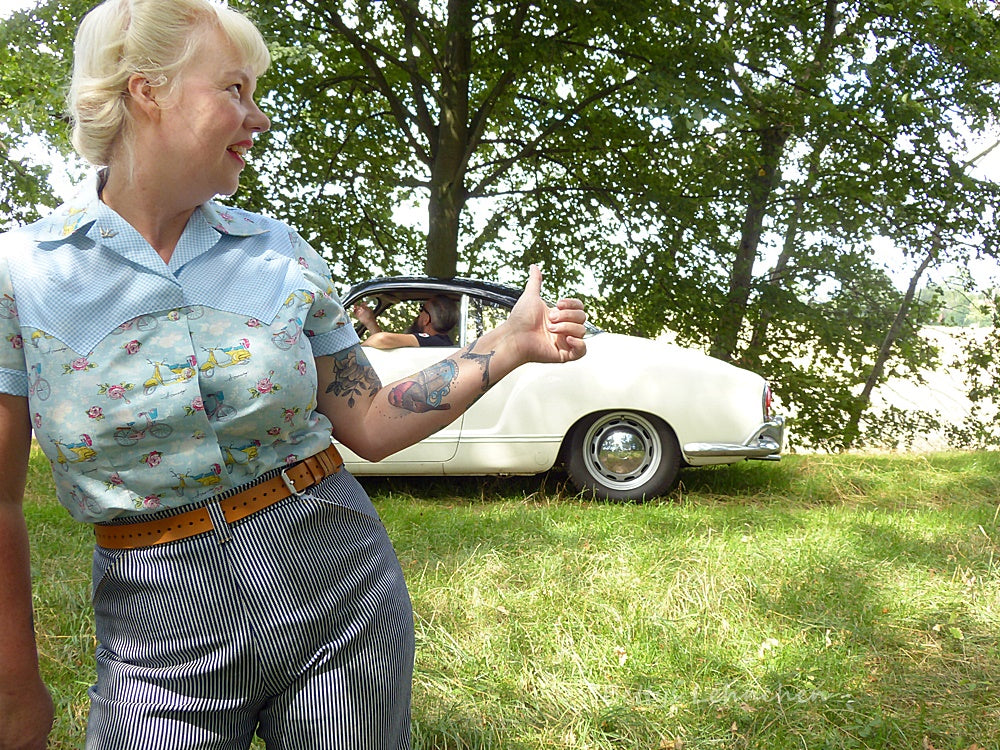
JETTE & TRUDI | VINTAGE ENSEMBLE
Blouse with yoke -
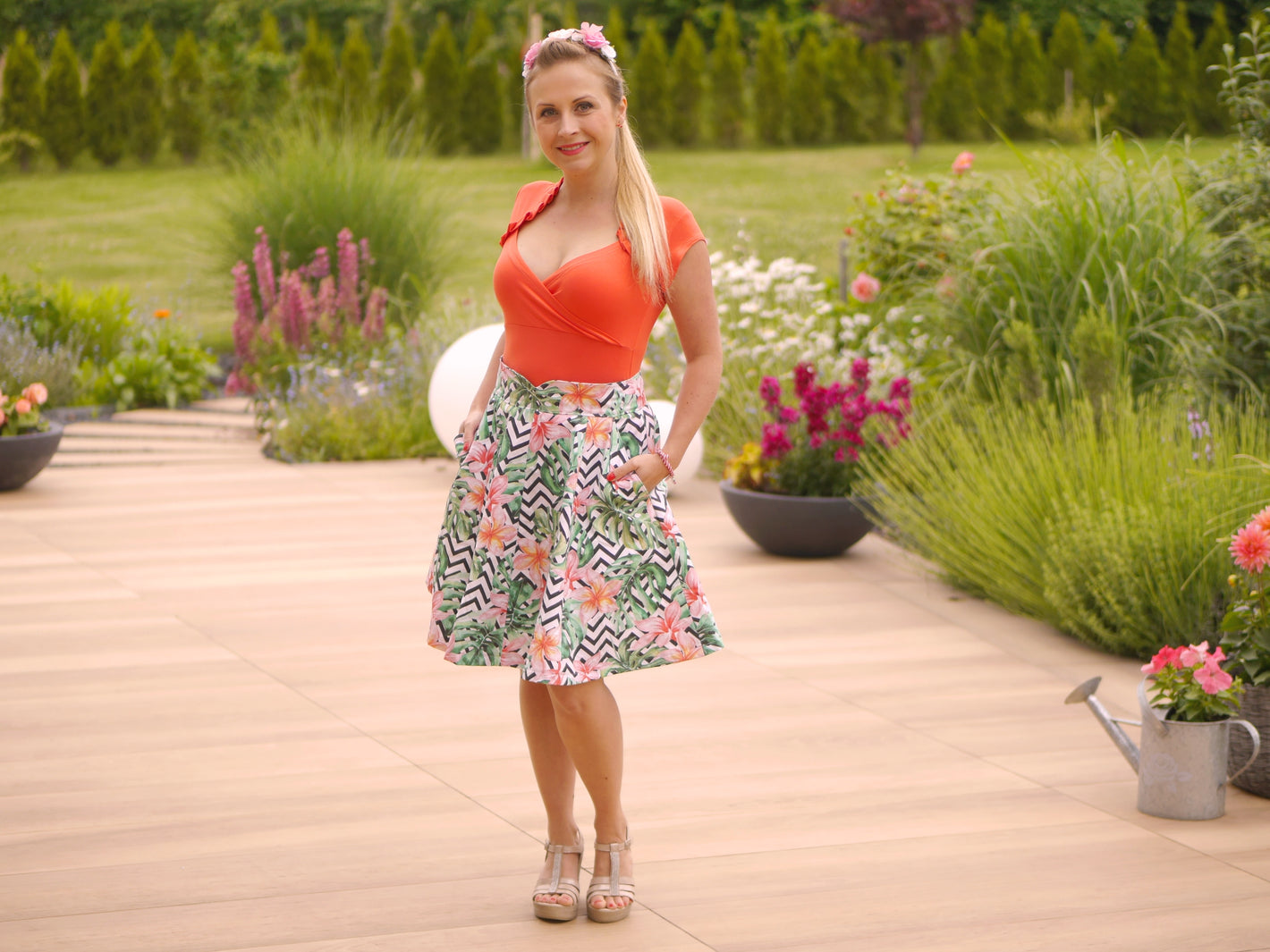
ANAIS & SOMMERLIEB | SKIRT & SHIRT
TO RAILWAY STORM
FURTHER INSERTS | SHORT PROFILE
-
✁ THE IRONING TAPE
Iron-on hemming tape, also known as fusible hemming tape, is a practical tool frequently used for hemming fabrics without sewing. It consists of a heat-activated adhesive applied to a backing strip. The tape is placed between two layers of fabric and heated with an iron, causing the adhesive to melt and bond the fabrics together. In industrial settings, pre-cut iron-on hemming tape is used to manage frequently repeated tasks more quickly, precisely, and easily.
-
✁ Aramid insoles
Aramid linings consist of heat- and cut-resistant synthetic fibers known for their high strength and durability. These linings are frequently used in the manufacture of protective clothing, such as motorcycle gear, firefighter uniforms, and bulletproof vests. Aramid linings offer protection against high temperatures, flames, cuts, and abrasion, while remaining lightweight and flexible.
-
✁ THE FABRIC LINER
Woven interlinings are interlinings made from various fibers, used in the clothing industry to give fabrics more stability and structure. They are often used for collars, cuffs, and button plackets. Woven interlinings are available in different thicknesses and materials and can be either iron-on or non-iron-on.
-
✁ THE FELT INSERT
Felt interlinings consist of compressed wool felt or synthetic fibers and are used to reinforce and insulate garments. They are particularly popular in the production of winter clothing such as coats and jackets. Felt interlinings can be cut to size and sewn or ironed on as needed.
-
✁ THE FOAM INSERT
Foam inserts are lightweight foam inserts commonly used in the production of padded garments such as bras, swimsuits, and sportswear. They provide support and shape without adding weight to the garment. You can find the right product for a bra project (recommendation: k.triny lingerie ) under the term 'laminate' .
-
✁ THE THERMAL FILLING COTTON
Thermal insulation wadding is an innovative material solution that offers excellent thermal insulation and comfort in a wide variety of textile projects. This special type of wadding consists of synthetic or natural fibers designed to effectively trap heat while providing a lightweight and breathable material.
ODE TO THE SEWING MACHINE
Dear Swallows, it's time to take your sewing to the next level and tackle more challenging projects! Using interfacing can help you achieve more professional results and master techniques usually only found in professional tailoring.
Don't be afraid to try new things and discover the variety of interfacings. They offer a great way to improve your crafting skills and enhance your projects. Whether it's shaping the perfect collar, creating a clean facing, or optimizing the fit of a garment, interfacings can make all the difference.
Dare to unleash your creativity and experiment with different interfacings to see how they can improve your work. Learn from your experiences and grow as sewing artists. With determination, practice, and the correct use of interfacings, you can master even the most challenging projects.
Don't be intimidated by the complexity of certain techniques. Instead, see them as a challenge and an opportunity to develop your skills. With each project, you'll become more confident and experienced, and you'll be surprised at what you can achieve.
So, get out your sewing machines and swallow patterns and dare to tackle the most challenging projects I've designed. It's worth it. ❥ The Swallow
* AD | AFFILIATE LINKS | HEARTFELT RECOMMENDATIONS THAT RECEIVE A COMMISSION THROUGH THE USE OF THE LINK.
- Choosing a selection results in a full page refresh.
- Opens in a new window.